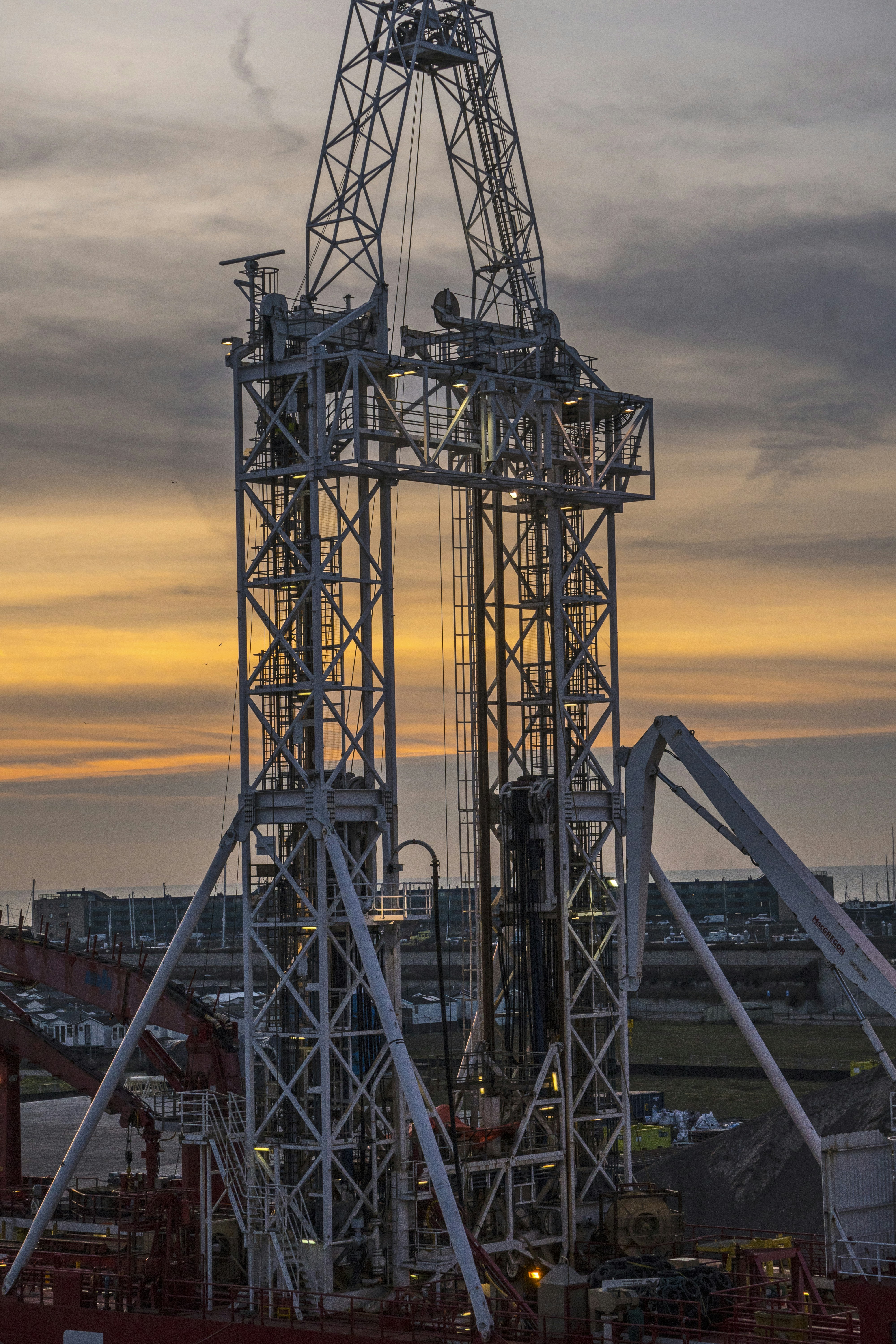
Drill rig silhouetted against dusk sky with work lights casting teal glow across mud and steel
97%

of rural commercial projects require a well permit before breaking ground.

Most developers find out too late.

Scroll for data
Commercial DrillingHydrogeological AssessmentPermit FilingPump TestingFormation AnalysisSubdivision Water SystemsAgricultural IrrigationIndustrial Process WaterCommercial DrillingHydrogeological AssessmentPermit FilingPump TestingFormation AnalysisSubdivision Water SystemsAgricultural IrrigationIndustrial Process Water
420 ft

Maximum commercial depth — standard mobilization

Formation depth determines your project viability before a single permit is filed.

Every parcel sits above a different geology. A subdivision at 240 ft in Ogallala sandstone costs $38/ft. The same project in fractured crystalline at 480 ft runs $72/ft — and yields 60% less water. Knowing which formation you're punching through before your civil engineer draws the utility sheet saves 4–8 weeks of redesign.

Texas Hill Country
Edwards Limestone
180–340 ft
40–120 GPM
Great Plains
Ogallala Sandstone
80–240 ft
200–800 GPM
Southeast Coastal Plain
Floridan Aquifer
60–180 ft
100–600 GPM
Appalachian Foothills
Fractured Crystalline
200–500 ft
5–40 GPM
Pacific Northwest
Volcanic Basalt
120–380 ft
30–200 GPM
Northern Plains
Dakota Sandstone
300–800 ft
20–80 GPM

Commercial threshold: Most subdivision water systems require a minimum 25 GPM sustained yield per 50 lots. Agricultural irrigation for center-pivot systems demands 400–1,200 GPM. Industrial process water starts at 200 GPM. Yield testing is performed at 72-hour intervals before any infrastructure commitment.

Fig. 01 — Geological Cross-SectionTypical Southwest Formation
Topsoil & Fill0–15 ft
Clay / Caliche15–80 ft
Limestone Karst80–220 ft
Shale Confining Layer220–280 ft
Sandstone Transition280–340 ft
AQUIFER ZONE ◆340–420 ft
0'100'200'300'420'
Target aquifer zone — sustained yield confirmed by pump test
Commercial DrillingHydrogeological AssessmentPermit FilingPump TestingFormation AnalysisSubdivision Water SystemsAgricultural IrrigationIndustrial Process WaterCommercial DrillingHydrogeological AssessmentPermit FilingPump TestingFormation AnalysisSubdivision Water SystemsAgricultural IrrigationIndustrial Process Water
Fig. 02 — Permit Approval TimelineDays from application
Site Hydrogeological Assessment7d
Permit Application Filing3d
Agency Review Period21d
Public Notice (if required)14d
Permit Issuance5d
Drilling Mobilization7d
Day 0Day 10Day 20Day 30Day 40Day 45

Critical path: Developers who submit hydrogeological assessment with permit application reduce agency review time by 35% on average. Aquifer pre-files on your behalf in 22 Texas groundwater conservation districts.

90 days

Maximum permit approval window — California SGMA basins

Permit timelines are the invisible delay in every rural development schedule.

A general contractor who discovers the county requires a 60-day public notice period after breaking ground loses 8–12 weeks of schedule and faces a stop-work order. We file pre-permit hydrogeological assessments with 22 Texas groundwater conservation districts and 14 western state agencies — before you need them.

Travis County, TX
Commercial Water Well · TCEQ + BSEACD
14–21 days
Maricopa County, AZ
Irrigation Well · ADWR
30–45 days
Fresno County, CA
Agricultural Production · SGMA Basin
60–90 days
Weld County, CO
Commercial / Industrial · CO DWR
45–60 days
Bexar County, TX
Subdivision Master Well · EUWD + TCEQ
21–35 days
Tarrant County, TX
Commercial Production · TRWD
18–28 days

Pre-permit service: Aquifer provides binding hydrogeological letters of opinion accepted by TCEQ, ADWR, and Colorado DWR for subdivision plat approval before any drilling commitment. Letter turnaround: 5 business days.

Commercial DrillingHydrogeological AssessmentPermit FilingPump TestingFormation AnalysisSubdivision Water SystemsAgricultural IrrigationIndustrial Process WaterCommercial DrillingHydrogeological AssessmentPermit FilingPump TestingFormation AnalysisSubdivision Water SystemsAgricultural IrrigationIndustrial Process Water
$28–$95

Per-foot drilling cost range — all commercial formations

The number on the utility sheet rarely matches the number on the invoice.

Civil engineers budget wells at $35/ft because that's the residential average. Commercial production wells in fractured crystalline formations run $65–$95/ft, require dual-casing to 200 ft, and need a 72-hour pump test before any infrastructure can be designed around them. The formation under your parcel determines your actual budget — not the regional average.

Formation
Cost/ft · Avg Total
Ogallala Sandstone
Avg depth: 160 ft
$28–$42
$4,480–$6,720
Edwards Limestone
Avg depth: 260 ft
$38–$55
$9,880–$14,300
Floridan Aquifer
Avg depth: 120 ft
$32–$48
$3,840–$5,760
Volcanic Basalt
Avg depth: 280 ft
$55–$78
$15,400–$21,840
Fractured Crystalline
Avg depth: 380 ft
$65–$95
$24,700–$36,100
Dakota Sandstone
Avg depth: 520 ft
$42–$60
$21,840–$31,200
Low difficulty
Medium difficulty
High difficulty

Know your formation before your bid goes out.

Aquifer provides a no-obligation parcel hydrogeological assessment — formation identification, estimated depth range, and projected cost-per-foot for your specific APN within 5 business days.

Fig. 03 — Budget by Project TypeAll-in well cost
Rural Subdivision Master Well
50–200 lots · 25–80 GPM sustained
$18kIncludes pump, pressure tank, distribution header$95k
Agricultural Irrigation
Center-pivot · 400–1,200 GPM
$35kIncludes turbine pump, motor, column pipe$180k
Commercial / Industrial
Process water · 100–500 GPM
$22kIncludes water quality testing, treatment stub-out$130k
Multi-Family / Mixed Use
50–300 units · 20–60 GPM
$15kIncludes pressure system, storage tank$80k
$0$50k$100k$150k$200k

Excludes: State permit fees ($450–$3,200), easement costs, water quality treatment, and electrical service to wellhead. Aquifer provides itemized budgets with permit fee schedules at no charge during assessment.

Commercial DrillingHydrogeological AssessmentPermit FilingPump TestingFormation AnalysisSubdivision Water SystemsAgricultural IrrigationIndustrial Process WaterCommercial DrillingHydrogeological AssessmentPermit FilingPump TestingFormation AnalysisSubdivision Water SystemsAgricultural IrrigationIndustrial Process Water
Fig. 04 — Cost of Failure vs. SuccessComparative analysis
Failed Well Scenario
Initial drilling (dry hole)$24,000
Re-mobilization$8,500
Alternate site survey$3,200
Second drill attempt$31,000
Schedule delay (12 wks)$47,000
Permit re-application$2,800
Redesign / engineering$18,500
Total exposure$135,000
Aquifer Partnership
Hydrogeological assessment$0*
Pre-permit filing$850
Production drilling$28,400
Pump & casing$12,200
72-hr pump test$3,400
Water quality analysis$1,100
Final permit close-out$650
Total investment$46,600

*Hydrogeological assessment waived for projects exceeding $40,000 drilling scope. Dry-hole risk reduced to 2.3% with pre-drill assessment vs. 18.7% industry average without site-specific geological review.

$135k

Average total cost — failed commercial well with schedule delay

A dry hole doesn't just cost drilling — it costs your schedule, your subcontractors, and your certificate of occupancy.

The average commercial dry hole adds 12 weeks to a project schedule. For a 50-lot subdivision, that's $47,000 in carrying costs, $18,500 in engineering redesign, and a permit that must be re-filed with the county. Aquifer's pre-drill assessment reduces dry-hole risk from 18.7% (industry average without site review) to 2.3%.

18.7%
Industry dry-hole rate
Without site assessment
2.3%
Aquifer dry-hole rate
With pre-drill assessment
12 wks
Avg schedule impact
Failed commercial well
5 days
Assessment turnaround
Binding letter of opinion

Building your bid team? Get our Contractor Rate Sheet.

Itemized per-foot drilling rates by formation, mobilization fees, pump test pricing, and permit service schedules — formatted for inclusion in your bid package.

Request a Site Assessment

Provide your project details and we'll return a formation assessment, estimated depth-to-water, projected cost range, and permit timeline within 5 business days — at no charge for projects over $40,000 scope.

Response within 5 business days. No obligation. Assessment waived for projects exceeding $40,000 drilling scope.